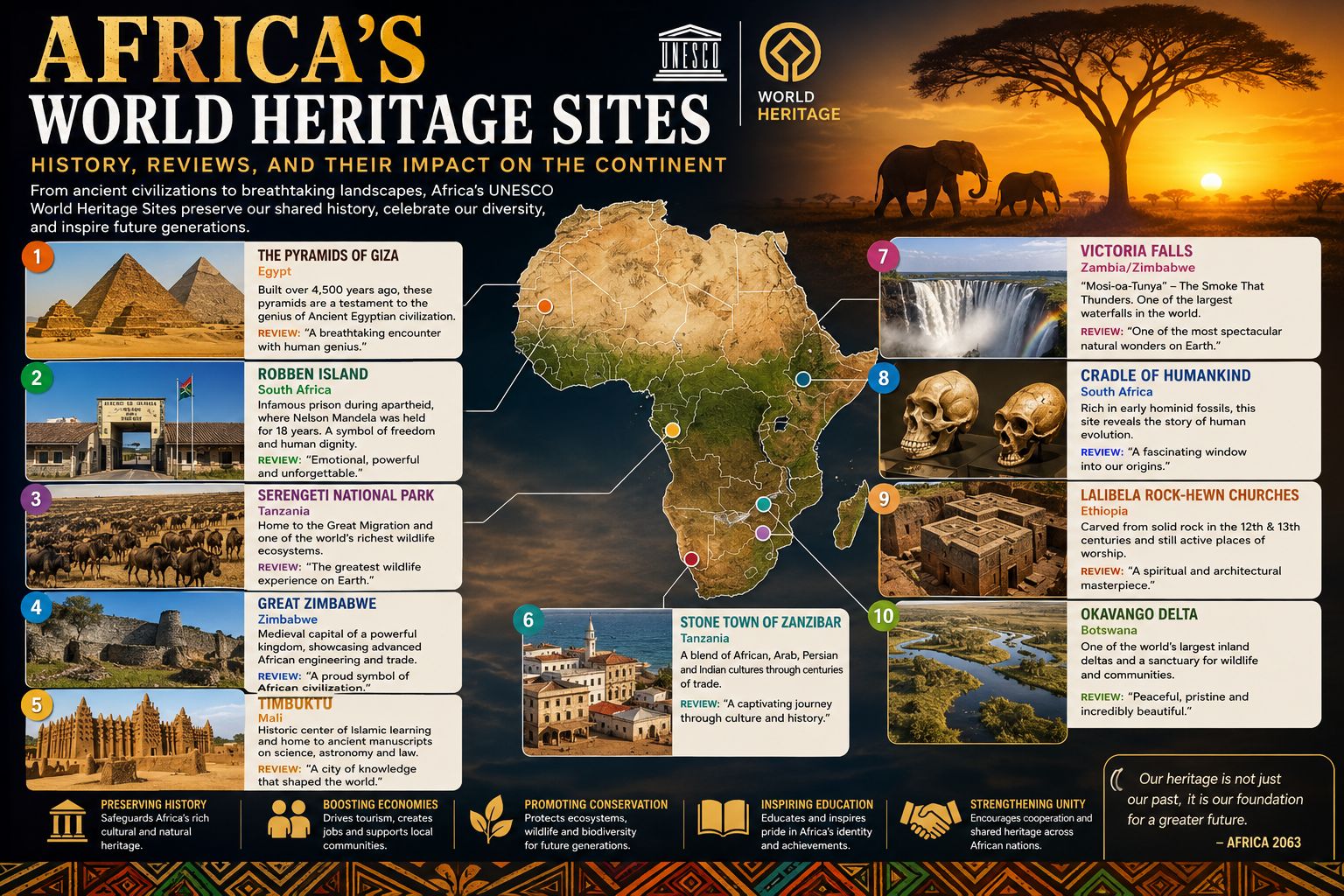
Africa is home to some of the world’s most extraordinary cultural and natural treasures. From the pyramids of Egypt to the plains of the Serengeti, the continent’s World Heritage Sites tell stories of ancient civilizations, human origins, spiritual traditions, liberation struggles, biodiversity, and resilience.
According to UNESCO, Africa currently has more than 100 World Heritage properties spread across the continent, including cultural, natural, and mixed heritage sites. These sites preserve Africa’s collective memory while contributing to tourism, education, conservation, and economic development.
This article explores some of Africa’s most important World Heritage Sites, their history, visitor reviews, and their impact on the continent.
What Are UNESCO World Heritage Sites?
UNESCO World Heritage Sites are places considered to have “Outstanding Universal Value” to humanity. They may include:
- Ancient monuments
- Sacred landscapes
- Archaeological sites
- Natural ecosystems
- Cultural cities
- Wildlife reserves
UNESCO’s African heritage initiatives aim to preserve these treasures while promoting sustainable development and cultural identity across the continent.
1. The Pyramids of Giza — Egypt
Pyramids of Giza
History
Built more than 4,500 years ago, the Pyramids of Giza are among the oldest and most famous structures in human history. Constructed during the Fourth Dynasty of Ancient Egypt, the pyramids served as royal tombs for Pharaohs Khufu, Khafre, and Menkaure.
The Great Pyramid was once considered one of the Seven Wonders of the Ancient World.
Visitor Reviews
Travelers describe the site as:
“A breathtaking encounter with human genius.”
Many visitors praise the scale and engineering brilliance of the pyramids, although some mention overcrowding during peak tourist seasons.
Impact on Africa
The pyramids symbolize Africa’s contribution to world civilization and attract millions of tourists annually, generating major economic activity for Egypt and the continent.
2. Robben Island — South Africa
Robben Island
History
Robben Island served as a prison during apartheid and is most famous for incarcerating Nelson Mandela for 18 years.
The island became a UNESCO World Heritage Site because it represents the triumph of democracy and human dignity over oppression.
Visitor Reviews
Many visitors describe the experience as emotional and transformative.
Former political prisoners often guide tours, giving visitors firsthand accounts of apartheid brutality and resistance.
Impact on Africa
Robben Island has become a global symbol of freedom, reconciliation, and human rights, strengthening Africa’s liberation legacy.
3. Serengeti National Park — Tanzania
Serengeti National Park
History
The Serengeti ecosystem is one of the world’s most important wildlife conservation areas. It is famous for the Great Migration involving millions of wildebeest, zebras, and gazelles.
Visitor Reviews
Travelers frequently describe the Serengeti as:
“The greatest wildlife experience on Earth.”
Photographers and safari enthusiasts praise its biodiversity and natural beauty.
Impact on Africa
The park boosts eco-tourism, conservation research, and employment while protecting endangered species.
4. Great Zimbabwe — Zimbabwe
Great Zimbabwe
History
Great Zimbabwe was the capital of a powerful African kingdom between the 11th and 15th centuries. Built entirely of stone without mortar, it demonstrates advanced African engineering and trade networks.
The city was once connected to trade routes reaching China, India, and the Middle East.
Visitor Reviews
Visitors admire the architectural sophistication and historical significance of the ruins.
Many African travelers describe it as:
“A proud symbol of African civilization.”
Impact on Africa
Great Zimbabwe challenged colonial myths that denied Africans advanced civilizations before European contact.
5. Timbuktu — Mali
Timbuktu
History
Timbuktu became a major center of Islamic scholarship during the 15th and 16th centuries. Its universities and libraries preserved thousands of ancient manuscripts on science, astronomy, law, and philosophy.
Visitor Reviews
Despite security challenges, historians and scholars continue to praise Timbuktu’s intellectual legacy.
Impact on Africa
Timbuktu demonstrates Africa’s historical role in global education and scholarship.
6. Stone Town of Zanzibar — Tanzania
Stone Town
History
Stone Town reflects centuries of African, Arab, Persian, and Indian cultural exchange through trade along the Indian Ocean coast.
The city’s architecture blends multiple civilizations and historical influences.
Visitor Reviews
Travelers love its narrow streets, spice markets, and historical atmosphere.
Impact on Africa
Stone Town highlights Africa’s multicultural trading history and strengthens tourism in East Africa. UNESCO continues supporting conservation efforts in Zanzibar.
7. Victoria Falls — Zambia/Zimbabwe
Victoria Falls
History
Known locally as “Mosi-oa-Tunya” meaning “The Smoke That Thunders,” Victoria Falls is one of the largest waterfalls in the world.
Visitor Reviews
Tourists frequently describe the falls as:
“One of the most spectacular natural wonders on Earth.”
Impact on Africa
The site drives tourism, hospitality, and regional cooperation between Zambia and Zimbabwe.
8. The Cradle of Humankind — South Africa
Cradle of Humankind
History
This site contains some of the oldest hominid fossils ever discovered and provides evidence about human evolution dating back millions of years.
Visitor Reviews
Visitors enjoy the educational exhibitions and archaeological significance.
Impact on Africa
The site reinforces Africa’s identity as the birthplace of humanity.
9. Lalibela Rock-Hewn Churches — Ethiopia
Rock-Hewn Churches of Lalibela
History
Built during the 12th and 13th centuries, these churches were carved directly into volcanic rock and remain active places of worship.
Visitor Reviews
Pilgrims and tourists describe Lalibela as:
“A spiritual and architectural masterpiece.”
Impact on Africa
Lalibela preserves African Christianity’s deep historical roots and attracts religious tourism.
10. Okavango Delta — Botswana
Okavango Delta
History
The Okavango Delta is one of the world’s largest inland deltas and supports exceptional biodiversity.
Visitor Reviews
Safari travelers praise its peaceful landscapes and rich wildlife.
Impact on Africa
The delta supports conservation, eco-tourism, and local livelihoods while protecting fragile ecosystems. UNESCO recently highlighted community-led conservation in Southern Africa.
Challenges Facing African Heritage Sites
Despite their importance, many African World Heritage Sites face threats such as:
- Climate change
- Armed conflict
- Illegal mining
- Urban expansion
- Poaching
- Poor infrastructure
UNESCO reports that several African heritage sites remain on the “World Heritage in Danger” list due to these pressures.
Online travel communities also discuss challenges including preservation funding and responsible tourism.
Why African Heritage Matters
Africa’s heritage sites are more than tourist destinations. They:
- Preserve African identity
- Educate future generations
- Promote Pan-African pride
- Create jobs through tourism
- Support conservation and research
- Strengthen global recognition of African history
UNESCO continues working with African governments and communities to improve heritage conservation and representation on the World Heritage List.
Africa’s World Heritage Sites tell the story of humanity itself from the origins of human life to powerful kingdoms, spiritual traditions, resistance movements, and ecological wonders.
They remind the world that Africa is not only rich in natural resources, but also in history, knowledge, innovation, and cultural brilliance.
As Africa moves toward the vision of Agenda 2063, preserving and promoting these heritage sites will remain essential for building a united, conscious, and globally respected continent.