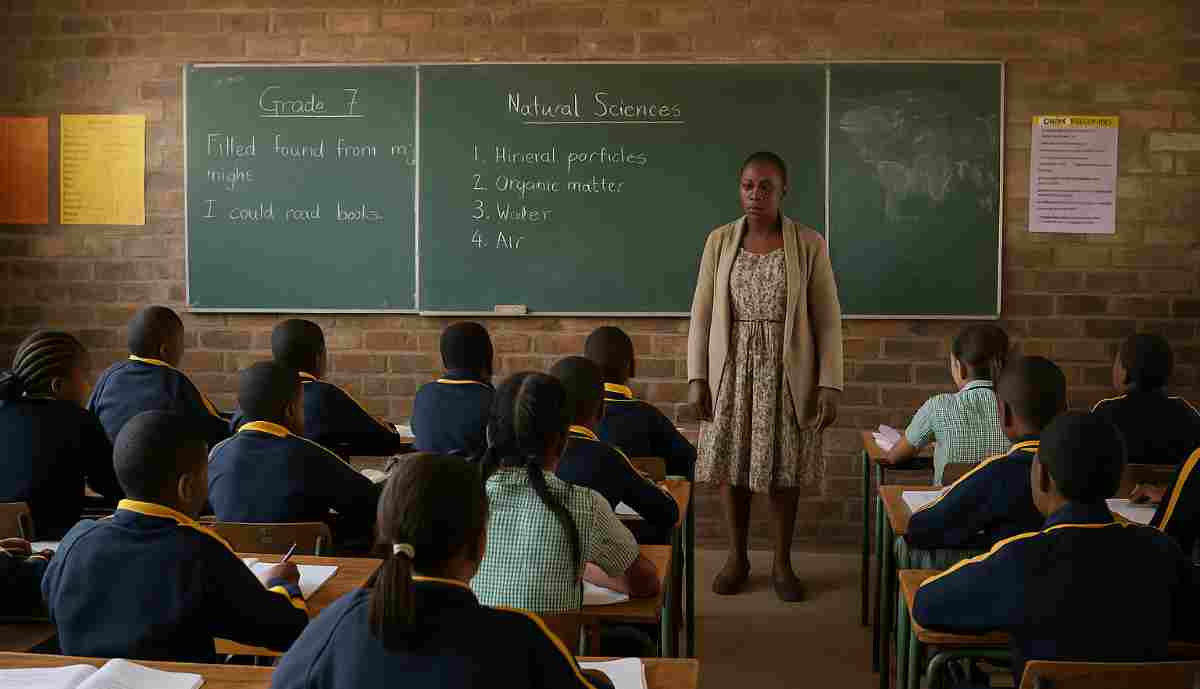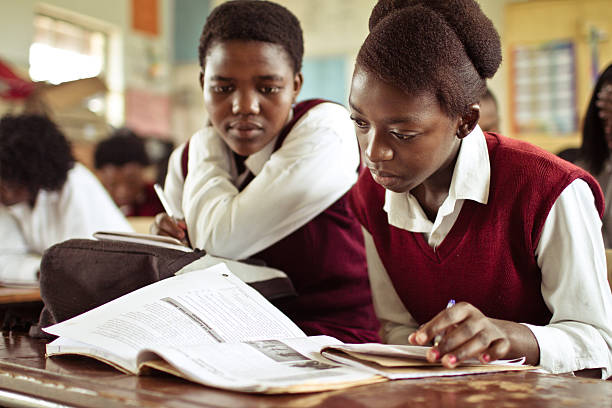
South African girls (from the Xhosa tribe) working together on their studies at an old worn desk in a class room in the Transkei region of rural South Africa.
South Africa’s public education system is carrying more than just the hopes of its own citizens. With over 250,000 foreign pupils and an estimated 3,200 foreign teachers enrolled and employed in public schools, the country’s classrooms have quietly become some of the most diverse on the African continent.
This reality raises difficult but necessary questions: What does this say about access to education in South Africa? What pressures does it place on an already stretched system? And what does it reveal about the state of education across the region?
A Magnet for Education in the Region
South Africa’s public education system, despite its many challenges, remains more accessible and better resourced than those of many neighbouring countries. For thousands of families from across the Southern African Development Community (SADC) and beyond, South Africa represents opportunity—free or subsidised schooling, feeding schemes, learner support programmes, and relatively stable institutions.
The presence of more than a quarter of a million foreign learners suggests that South Africa is viewed as a regional education safety net. In many cases, these learners are children of documented migrant workers. In others, they are refugees, asylum seekers, or undocumented families seeking stability and continuity in their children’s education.
The Constitution guarantees the right to basic education to everyone within South Africa’s borders. In principle, this reflects the country’s strong human rights framework. In practice, it places enormous strain on schools that were already struggling to meet local demand.
Foreign Teachers: Filling Gaps in a Fragile System
The presence of approximately 3,200 foreign teachers in public schools tells another important story. Rather than displacing local educators, foreign teachers are often recruited to fill critical shortages, particularly in:
- Mathematics
- Physical Sciences
- Information Technology
- Rural and township schools
In many cases, these educators come from countries with strong subject expertise but fewer employment opportunities. Their presence highlights a contradiction within the system: while South Africa produces thousands of qualified teachers, it still struggles with deployment, retention, and skills matching.
Foreign educators often go where local teachers are reluctant to serve, underserved rural areas, informal settlements, and overcrowded urban schools.
Classrooms Under Pressure
South Africa’s education system is already grappling with:
- Overcrowded classrooms
- Infrastructure backlogs
- Teacher shortages
- Limited learning materials
The inclusion of large numbers of foreign learners intensifies these pressures. In some schools, learner-teacher ratios exceed acceptable norms. Feeding schemes are stretched thinner. Textbooks, desks, and sanitation facilities must serve more children than they were designed for.
Importantly, this strain is not caused by foreign learners themselves, but by a funding and planning model that has not fully adjusted to migration realities.
Access vs Capacity: A Policy Dilemma
At its core, the issue exposes a tension between constitutional values and state capacity.
On one hand, South Africa is rightly proud of an education system that does not turn children away on the basis of nationality. On the other hand, the state has been slow to:
- Accurately plan for migrant learner numbers
- Adjust education budgets accordingly
- Expand infrastructure in high-migration areas
This gap fuels frustration at community level, where parents see overcrowded classes and declining individual attention, often blaming migrants instead of systemic underinvestment.
A Regional Problem, Not a Local One
The reality of foreign learners in South African schools is also a mirror held up to the continent. Migration into South Africa is driven by inequality between African states, conflict, unemployment, and uneven access to quality education.
South Africa is not failing because it attracts learners, it is under pressure because regional education development remains uneven, and because national planning has not kept pace with demographic realities.
The Bigger Question
The presence of foreign pupils and teachers ultimately forces South Africa to confront uncomfortable truths:
- Education access is improving faster than education capacity
- Schools are carrying social responsibilities far beyond learning
- Migration is a permanent feature, not a temporary crisis
The question is no longer whether South Africa should educate foreign children it already does. The real question is whether the state is willing to properly resource, plan, and adapt its education system to match the reality on the ground.
Because classrooms do not recognise borders.
But budgets, policies, and infrastructure still do.