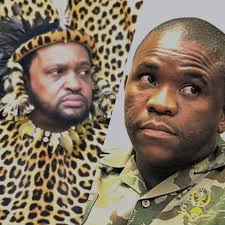
Brown Mogotsi alleged CIA recruitment of King Misuzulu and Lt-Gen Mkhwanazi, but his claims lack documentation and face scrutiny in cross-examination regarding credibility and evidence.
Mogotsi made serious claims that Lt-Gen Mkhwanazi and Zulu King Misuzulu ka Zwelithini were recruited by the CIA to protect American interests. These allegations come from unnamed sources, and the commission is expected to investigate the credibility of these claims, including looking for documentation and links to financial transactions or communications. Mogotsi connected the CIA allegations to the treatment of Prince Simakade, suggesting foreign intelligence involvement in royal family dynamics. He also mentioned that he misled Mkhwanazi into believing he was simply an infiltrator while being a Crime Intelligence contact agent, which raises questions about his credibility and the nature of his intelligence role.
Mogotsi’s background includes time spent in uMkhonto weSizwe and later working as an informant and contact agent, but the title “contact agent” does not guarantee high-level intelligence access. Day Two of his examination by the Madlanga Commission will likely focus on verifying the sources behind his claims about CIA recruitment, asking specific questions about the unnamed source’s identity, verification methods, and Crime Intelligence documentation. The commission needs solid evidence, as it has previously cautioned against relying on hearsay.
Cross-examiners will also seek documentary evidence that may support Mogotsi’s claims. They will inquire about the existence of reports, emails, or intelligence logs that would substantiate his narrative. Without such documentation, his statements could be easily dismissed. Questions will also focus on the specifics of his role as a contact agent and whether he was cleared for foreign intelligence matters. There will be scrutiny on whether he might have fabricated details, possibly casting doubt on parts of his testimony.
Considering Mogotsi’s admission of tricking Mkhwanazi, questions will explore their relationship dynamics, potential personal motives behind his accusations, and any financial dealings that could tie into his intelligence work. The commission will investigate whether he has connections to criminal figures or cartels that could influence his testimony. If a connection emerges, it might suggest he is deflecting blame to protect himself.
The commission will also compare Mogotsi’s current testimony with previous statements from other witnesses to check for consistency. Any contradictions, especially concerning documented communications or financial transactions, may compromise his reliability. The political implications of naming King Misuzulu will be crucial, prompting questions about the motives for making such accusations without strong evidence, suggesting he might have a political agenda.
Mogotsi’s overall credibility and character will be assessed, considering his history and the possibility of exaggeration in his narratives. There will be an emphasis on understanding his claims about international intelligence training, distinguishing professional training from the suggestion of CIA recruitment.
By the end of Day Two, the commission aims to evaluate Mogotsi’s credibility, determine if his claims are plausible or fabricated, and decide whether to request further intelligence records or urgent testimony from Mkhwanazi and the royal family. The overall focus will be on rigorously verifying Mogotsi’s statements, assessing contradictions, and understanding his role in any criminal networks. The outcome will determine whether his testimony represents meaningful evidence or is merely a self-serving story.
Key Annotations of Brown Mogotsi’s Testimony
- Allegation of CIA Recruitment
- Mogotsi claimed that “there was a real suspicion that Lt-Gen Mkhwanazi was recruited by the CIA.”
- He also “alleged … that Zulu King Misuzulu ka Zwelithini … were allegedly recruited by the CIA to safeguard American strategic interests.”
- Annotation: These are second-hand claims, attributed to an unnamed source according to Mogotsi. The commission presumably will probe who the source is, whether documentation supports it, and whether there is any direct link (e.g., financial flows, communications, training records).
- Linking CIA Claims to Royal House Tensions
- Mogotsi told the commission that the CIA claim “further talks to the treatment … how they treated the brother of King Misizulu, Prince Simakade.”
- Annotation: By tying the CIA allegation to his narrative about alleged harassment or “intimidation” of the royal house (Prince Simakade in particular), Mogotsi is strongly suggesting that foreign-intelligence influence wasn’t abstract but operational that Mkhwanazi (and by implication, King Misuzulu) used their supposed role to interfere in intra-royal dynamics.
- On His Role as Contact Agent
- Mogotsi said he “tricked” Mkhwanazi into believing he was merely an “SAPS infiltrator,” while in fact working as a Crime Intelligence “contact agent” under his handlers.
- Annotation: This admission is very important, because it frames Mogotsi not as an outside conspiracy theorist, but as someone with a quasi-official intelligence role which could give him some access. But “contact agent” doesn’t necessarily mean full intelligence officer; his own description suggests a murky role, possibly with limited authority and strong dependence on his handlers.
- On His Intelligence Career
- He testified that between 1993 and 1995 he was in uMkhonto weSizwe, then became a paid informant, and eventually a contact agent for Crime Intelligence.
Annotation: This biographical detail is relevant. If true, it could lend some credibility to his claim of having intelligence experience. But “contact agent” is a broad term; it doesn’t necessarily mean he had clearance for the kind of high-level foreign-intel operations he now alleges.